
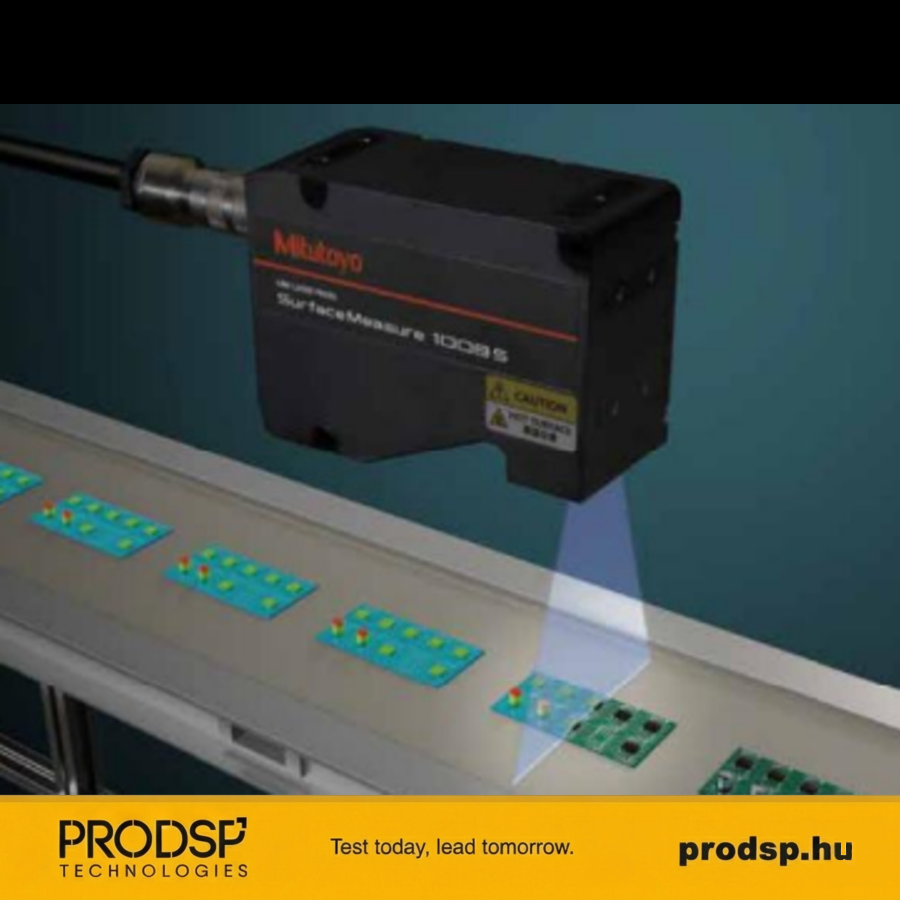
#26 - Laser line-scanner
🔦 Laser line-scanner–based 3D measurement systems
A common solution for complex geometric tasks is the use of a laser line scanner,
which is complemented with a linear actuator and an encoder.
🔹 Operating principle:
– The line scanner measures a 2D cross-sectional profile
– The actuator increments the position of the sensor or the workpiece
– Based on the encoder signals, the profiles are combined into a 3D point cloud
🔹 Resolution limitations:
– One axis: the resolution of the line scanner
– The other axis: the stepping speed permitted by the cycle time
→ Together, these two factors determine the 3D resolution
🔹 Sensor-principle limitations:
– Blind spots resulting from triangulation
– Often two opposing sensor heads are required
– Shiny or inhomogeneous surfaces can deflect the laser beam
🔹 Advantage:
– Outstanding depth accuracy on optimal surfaces
It is important to note that accurate motion control, feedback measurement, and dedicated software are required for 3D reconstruction.
Download LaserLineScanner.pdf